
Identify a Jasper County Owner
Finding a Jasper County owner of record works best in three steps. Begin with the street address, not a name. The parcel number that comes back is the key that links every later record. Copy it exactly as the county prints it. Open the assessor's parcel card and read the published Owner field. Then carry that name to the newest deed recorded for the parcel. That final step is what answers who owns this property. A tax-roll entry alone is only a clue and not proof of title.
- Enter the situs address in the Jasper County qPublic search and open the matching parcel.
- Copy the parcel ID and the owner name exactly as published.
- Use the GSCCCA real-estate index to identify the newest deed and grantee.
- For an entity owner, check its registered record with the Georgia Secretary of State; for an estate, ask Probate Court about the estate file.
Deeds in Jasper County often identify land by legal description rather than street address. Before you conclude anything, line up the county, the parties, the date, the book and page, and the parcel's land-lot or plat references.
Read Jasper's Exact Owner Field
Jasper County's assessor parcel card splits its data into three labeled pieces. They are the Owner field, the owner's mailing address, and the property's physical address. Each label does a different job. The Owner field is your tax-roll lead. The mailing address tells you where the county sends notices. The physical, or situs, address locates the land itself. Someone can hold a parcel without ever living on it. The mailing city may not even sit in the same taxing district as the property. So read the two addresses as separate facts. For a closer look at the present owner field, the current property owner guide helps. It walks through the owner field in detail.
The county's own sample card carries a warning worth heeding. Its content is not for use on legal documents. Treat the card as a current published lead. Save the parcel ID, and note the date you inspected it. To reach the assessor data itself, start at the qPublic entry page. That page is where Jasper County directs property searches.
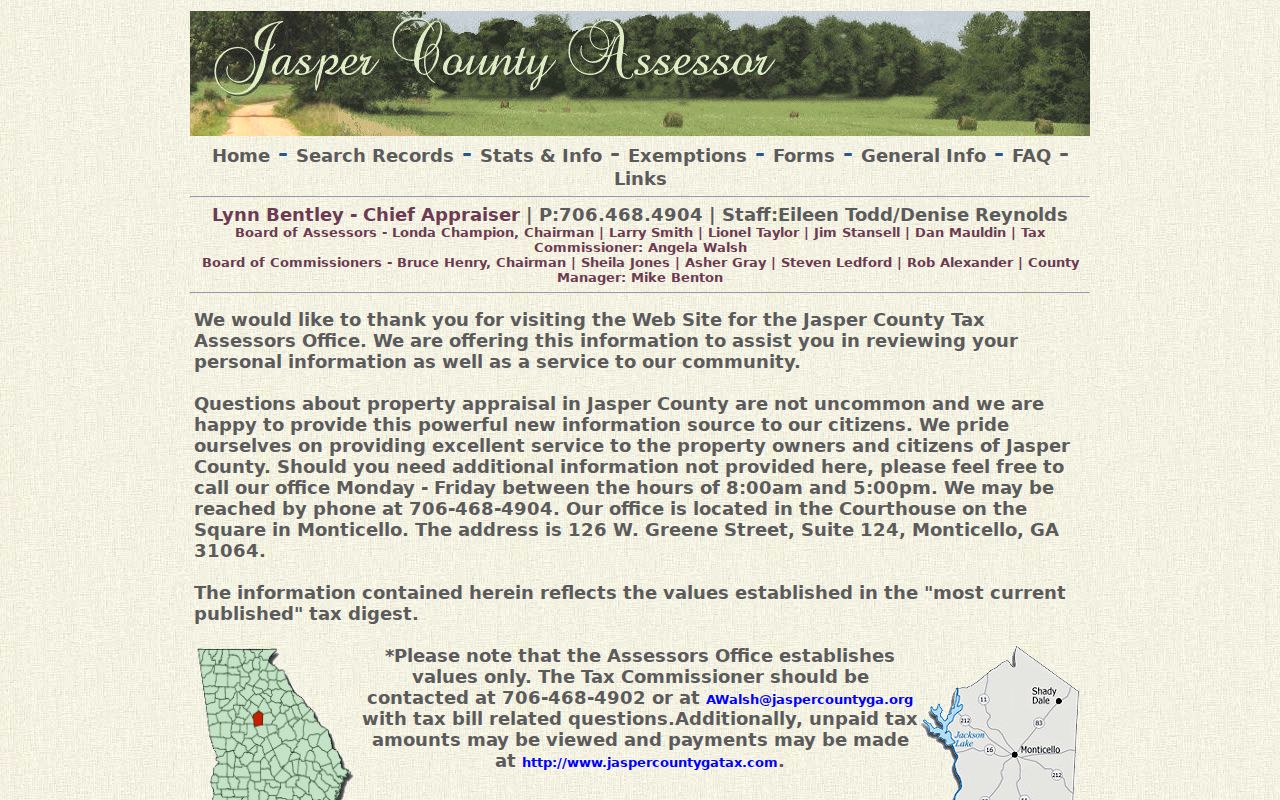
This portal is the first ownership clue, while the deed remains the confirmation record.
Separate Jasper Property Addresses
A mailing address proves nothing about occupancy. It also fails to prove that the parcel sits inside Monticello or Shady Dale. Rural Jasper County addresses often carry a city and ZIP label. Meanwhile, the land stays unincorporated. The fix is to check the physical address against the county GIS municipality layer. Keep the mailing address only as the tax-roll contact clue.
- Situs
- The physical location used to begin the parcel search.
- Mailing address
- The delivery point for owner notices, which may be elsewhere.
- Grantee
- The party receiving an interest in a recorded deed.
- Vesting
- The way the recorded instrument places title in a person or entity.
Trace to Jasper's Newest Grantee
A very recent closing may not show on the assessor roll yet. Jasper County sets no fixed number of days for that update. So take the assessor's name. Then run it through the GSCCCA real-estate index. Match the newest likely instrument against the parcel's legal description. Jasper's good-through table shows real-estate indexing back to 1960. Even so, an index entry is not a title opinion.
GSCCCA gives you three routes: name, book/page, and property search. Images sit behind the portal's access rules. For certified copies or missing images, contact the Clerk of Superior Court at 706-468-4901. Roll and deed ever disagree? Hand the clerk the instrument's book and page. Hand the assessor the parcel ID. Neither office should have to guess from an address alone.
Start with the official GSCCCA name-search screen before you chase the deed itself.
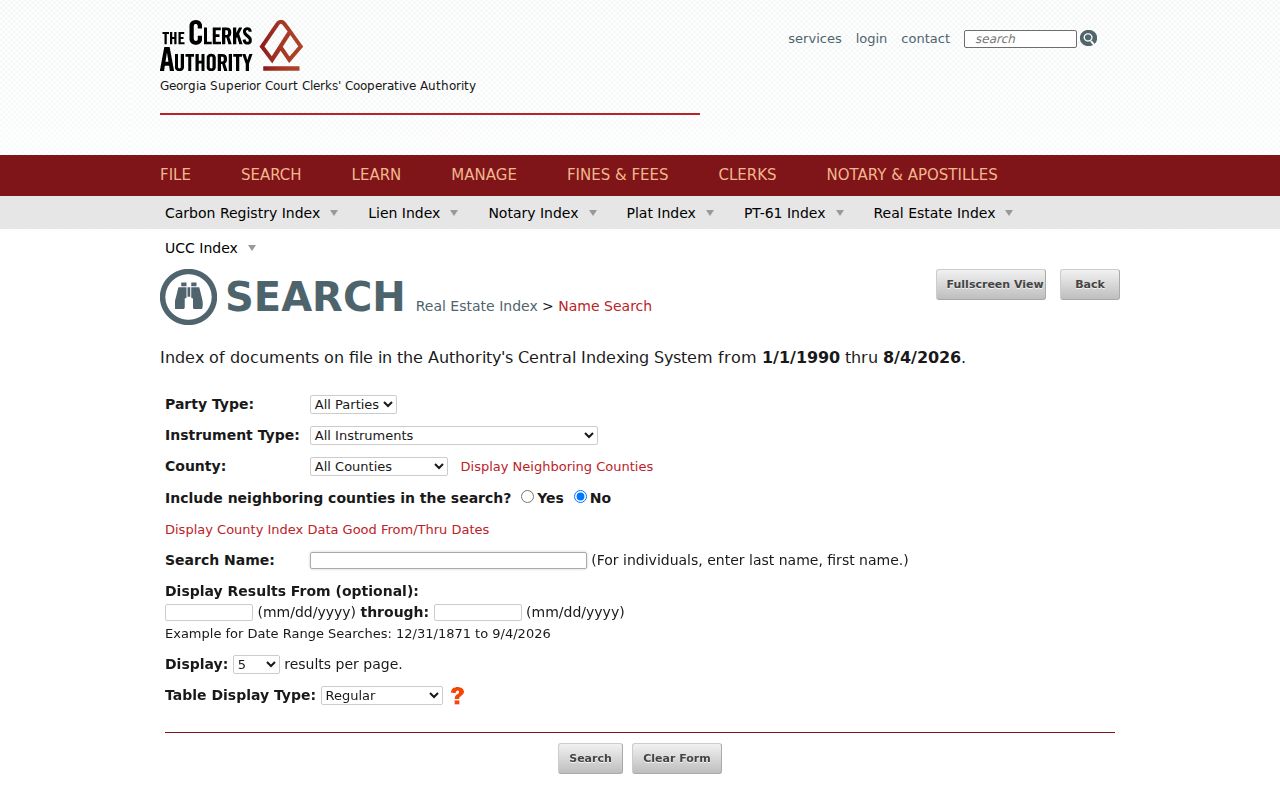
Party and date filters narrow the recorded-instrument check once the assessor hands you a candidate name.
Identify Jasper Entity Ownership
The Owner field does not always hold a person's name. An LLC, corporation, trust, or estate can sit there instead. Keep the punctuation intact when you search GSCCCA, and try sensible entity-name variants. A Georgia Secretary of State business record will give the entity's official name. The same record lists the registered agent. That agent is not automatically the beneficial owner of the property, though.
Estates call for a different bridge. Jasper Probate Court publishes no public estate docket. You will need to ask by decedent name and approximate year. Wills, administration papers, and an executor's deed can explain the gap. A surname-only deed search keeps missing the transfer. Archives and newspaper legal notices offer leads. But the deed and the estate file must carry any conclusion.
Compare Jasper Owner Sources
Each public source answers one slice of the ownership question. Who owns this property in Jasper County depends on lining them up. Tie them together with the parcel number and legal description, not with names that merely look alike.
| Record source | Ownership clue | Best use |
|---|---|---|
| qPublic assessor roll | Published Owner, mailing and physical fields | First owner lead |
| GSCCCA deed index and Clerk | Newest grantee and recorded instrument | Confirm the conveyance |
| County ArcGIS map | Parcel geometry, address point and map number | Connect an address to land |
| Secretary of State or Probate Court | Entity identity or estate authority | Explain a non-person owner |
The newest deed still settles the question. Planning files, tax bills, liens, and court orders fill in context, yet none of them overrides the recorded chain of title in Jasper County property records. Some situations call for more digging. A quiet-title order, an estate transfer, or a parcel split may still need a Clerk or court-file check before the owner trail comes clean.
Trace Jasper Split Parcels
One current address can trace back to land once part of a bigger parent tract. Jasper's 53 Pennington Road exhibit is a model of the trail worth keeping. It shows a smaller tract carved from a parent. It also lists a survey date and revision, a land lot and district, and a plat book and page. Those references help when two similar addresses blur together. They also matter when an old owner's deed seems to cover more acreage than the parcel now holds.
Search the GSCCCA Plat Index by name or by book and page. Then confirm the recorded image with the Clerk. Remember that a tax-map line is not a survey. Shared drives, easements, and boundary calls belong in the deed. The plat and the survey trail carry them too, not just the map.
Resolve Jasper Owner Conflicts
What happens when qPublic lists one owner and the newest deed names another? Start with the basics. Compare the dates. Confirm the parcel identity. Check whether the deed covers the same legal tract in Jasper County. A sale, exemption application, or permit can trigger an assessor review. But the county publishes no fixed ownership-refresh cycle. A deed recorded last week may simply be newer than the current digest.
Keep an audit trail. Save the parcel ID, inspection date, deed book/page, party spelling, and legal-description clue before contacting either office.
Two offices split the answer in Jasper County. The assessor at 706-468-4904 keeps the tax roll that shows who is listed as owner of record. The Clerk at 706-468-4901 holds the recorded deed itself. A written Georgia Open Records Act request can ask for any existing property records the offices maintain. They do not have to build a new ownership analysis for you.
Limit a Jasper Owner Search
A Jasper County property search answers who holds title, not who lives in the house. It will not settle a boundary line or expose a protected address. Georgia Safe at Home and VoteSafe shield qualifying addresses from public property records. When a field is withheld, respect the redaction. If it was swapped out, do not piece it together elsewhere. The records custodian can explain which exemption applies and how it works.
Skip commercial directories as a title source, since their owner of record data runs stale. Verify the deed records with the county before closing a purchase, chasing an easement, settling an estate, or fighting a dispute. Bring in a lawyer or surveyor as needed.
Lawful use. Use Jasper County owner records for legitimate property research; never use them to follow, threaten, harass, or defeat an address-safety program.