
Reconstruct Jasper Ownership by Era
The newest deed is your starting point. Work from it toward the era you care about. Jasper's online indexes and archival holdings overlap, but no single source spans the county's full history, and not every deed image is posted online.
| Historical source | Documented span | Custodian | Chain contribution |
|---|---|---|---|
| GSCCCA real-estate index | 1960 forward in Jasper table | Clerk / GSCCCA | Grantor, grantee, date and book/page |
| GSCCCA Plat Index | 1934 forward in Jasper table | Clerk / GSCCCA | Lot, subdivision and survey links |
| Mortgage records | 1808–1924 | Georgia Archives | Borrower, lender and land clues |
| Wills and estate files | 1809–1907 collections | Georgia Archives / Probate | Death-transfer bridge |
| Land grants | 1799–1823 collection | Georgia Archives | Early land-lot origin |
Owners after 1960 can usually be traced online first. Request missing or certified images from the Clerk. For earlier years, carry the last proven book/page, name, district, land lot, and neighboring tract into the clerk's deed books and the Archives finding aids.
Go Back Through Jasper's 1960 Cutoff
Jasper's real-estate index begins in 1960, per the county's row in the GSCCCA good-through table. That local row beats broader portal text. Search the official name index by grantor and grantee. Narrow by date and preserve each book/page reference. Images follow portal account and printing rules, while certified copies come from the Clerk at 706-468-4901. A missing image proves nothing. Ask the Clerk to inspect the controlling county index and the deed book itself. The GSCCCA disclaimer explains why recreated historical index data must be checked against clerk records.
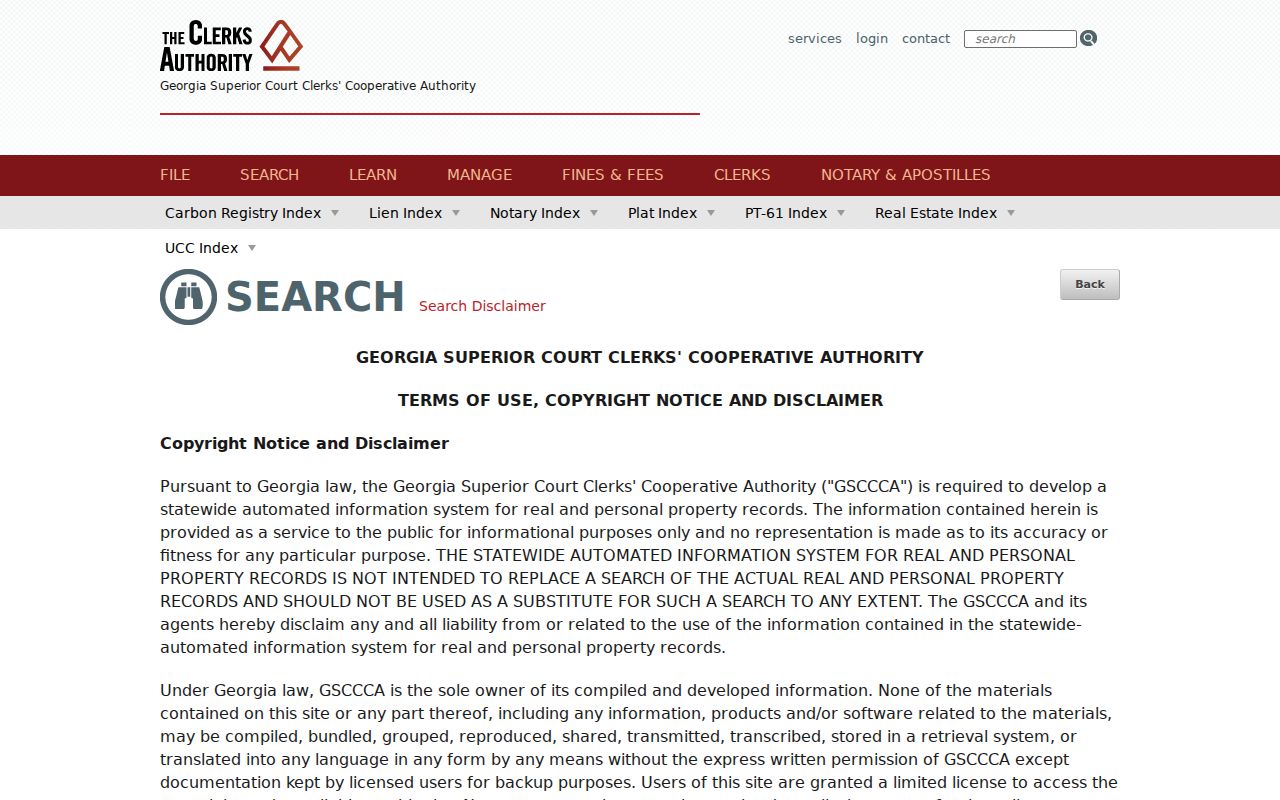
The portal's warning matters most when a former-owner chain hinges on one old spelling or index entry.
Trace Back Jasper Deeds
Skip the loose list of names. Build a deed-chain table instead, giving every row the instrument date, grantor, grantee, book/page, deed type, and the legal-description match that ties it to your parcel.
- Find the current party's acquisition deed with that party as grantee.
- Read the grantor and exact legal description from the instrument.
- Search that grantor as an earlier grantee and compare the land.
- Repeat until the online cutoff, then continue through clerk books and Archives.
- Grantor
- The party conveying the interest.
- Grantee
- The party receiving it.
- Chain of title
- The ordered sequence of instruments tied to the same land.
- Legal description
- The land identity that can survive address changes.
Open Jasper History with Plats
Plats can reconnect a chain after a split. Jasper's 53 Pennington Road exhibit shows how. It identifies a smaller tract from its parent, along with land lot and district, road and railroad calls, a survey revision, and Plat Book 10 Page 68. Search the GSCCCA Plat Index first. Then verify the original clerk image. A 1950 John E. Dumas plat carries eight acreage-labeled tracts, easement notes, certification, and a Deed Book 9/Page 209 reference. Multiple dates on a scanned copy may mark the survey, a revision, approval, or recording, so keep those events separate.
Reconstruct Jasper Estate Transfers
A death transfer rarely looks like a sale. Search the decedent, executor, administrator, and heirs as parties. Jasper Probate Court holds the estate files. Ask for one by name and approximate year. The court publishes no online estate docket, so phone or counter access is the path. Georgia Archives estate and will collections, plus Monticello News issues from 1903 forward, can surface estate notices and legal advertisements. Treat those as leads to a probate paper or recorded deed, never as title on their own.
Go Back to Randolph County
Jasper County began life as Randolph County and took its Jasper name in 1812. An early chain may need both names. Lottery records ignore street addresses. They speak in land lots and districts. Early lots were laid out as roughly 202.5-acre squares. The Georgia Archives land-grant and district-plat collections bridge that older vocabulary. Pull the newest proven old deed for your archive search. Carry its acreage, watercourse, road, right-of-way, district, and adjacent-owner calls.
Read Jasper's Scanning Record
A 2022 county bid targeted scanning and indexing about 22,100 deeds and 6,500 plats from older years. The bid shows a plan, not a finished product. The county has posted no completion notice.
Negative-search rule. Treat a blank web result as unresolved until the Clerk checks the county index, spelling variants, and book/page trail.
No Jasper record series documents a courthouse fire. Never explain a gap with an invented disaster.
Reconstruct Jasper Address Changes
Older Jasper instruments rarely use today's street names. A state route, railroad right-of-way, creek, land lot, or neighboring tract may stand in instead. Shady Dale's SR-83/SR-142 crossroads and rail lines help. Monticello records may cite a route into the square or an older road label. Search party names first. Then compare the legal description and plat. Keep initials, former surnames, entity punctuation, and estate roles intact, because a surname-only hit is a lead, not proof the two instruments share a former owner or tract.
Reconstruct Jasper Releases and Liens
Mortgages, liens, releases, easements, and court orders do not always transfer ownership. They still shape a property's recorded history. Jasper's lien index starts with 2003. Search names and book/page references. Pair each lien with its release so the chain never carries an open-ended burden. A quiet-title decree may explain a later deed. PeachCourt requires account access, the local Clerk remains the fallback for Superior Court files, and these documents belong in a separate event column so they never masquerade as owners.
Handle a Negative Jasper Archive Search
A finding aid lists what survives, not what every search will surface. A Jasper County parcel can hide behind a former county name. It can hide behind a land lot number. It can even hide behind a spelling variant that no modern index catches. Fiduciary roles, mortgage parties, and district numbers can matter too. So can the last deed reference you can prove.
The archive search can come up empty. Ask the Clerk whether the chain continues in an unindexed deed book. The Jasper County Library may also hold local material worth a phone call or visit. The library has no confirmed obituary index or city-directory run. Treat those leads as possibilities rather than promises.
Test Jasper's Earliest Owner Link
The chain of title can stretch past the modern index into early grants. The stopping point varies by parcel. Jasper-related land grants from 1799–1823 appear in the archives. The archives also hold mortgage, will, estate, and court series from the nineteenth century for Jasper County. One name in one series proves little. It does not by itself establish an unbroken chain of ownership.
Close the search at the earliest instrument you can tie to the same legal land. Document every gap, archive request, spelling choice, and guess along the way. For a purchase or a lawsuit, hire professional title work. A historical reconstruction of property records cannot take its place.
Lawful use. Trace Jasper County former owners for land history, estate work, or due diligence, never to track, threaten, or harass a living person.